Sebilj in Sarajevo: meaning, history and where to find it
The Sebilj fountain is a wooden public fountain on Baščaršija square in Sarajevo and one of the city's best-known landmarks. The first was built in 1753, while today's structure follows a design by architect Alexander Wittek. Visiting is free at any time of day.
At a glance
- Location
- Baščaršija Square, Stari Grad municipality
- Admission
- Free, open public square
- When
- Any time of day
- Duration
- 15 to 30 minutes; 1 to 2 hours with the bazaar
- Transport
- Tram to Baščaršija stop, right beside the square
- By car
- The bazaar is a pedestrian zone
- Mosque
- Baščaršija Mosque, roughly 60 metres from Sebilj
What Sebilj is and what the word means
A sebilj (public fountain) is a drinking fountain built in the form of a wooden kiosk. The word comes from Arabic and means 'path' or 'way'. In Ottoman cities it referred to a charitable fountain on a square or crossroads, where an attendant (sebiljdžija) scooped water from a basin and handed it free to thirsty passers-by.
Sarajevo once had hundreds of them. Only this one in Baščaršija (Sarajevo's old bazaar) survives today, making Sebilj both the fountain's name and the city's favourite meeting point: 'See you by the Sebilj.'
Legend
Whoever drinks water from the Sebilj will one day return to Sarajevo.
Where the Sebilj is and how to get there
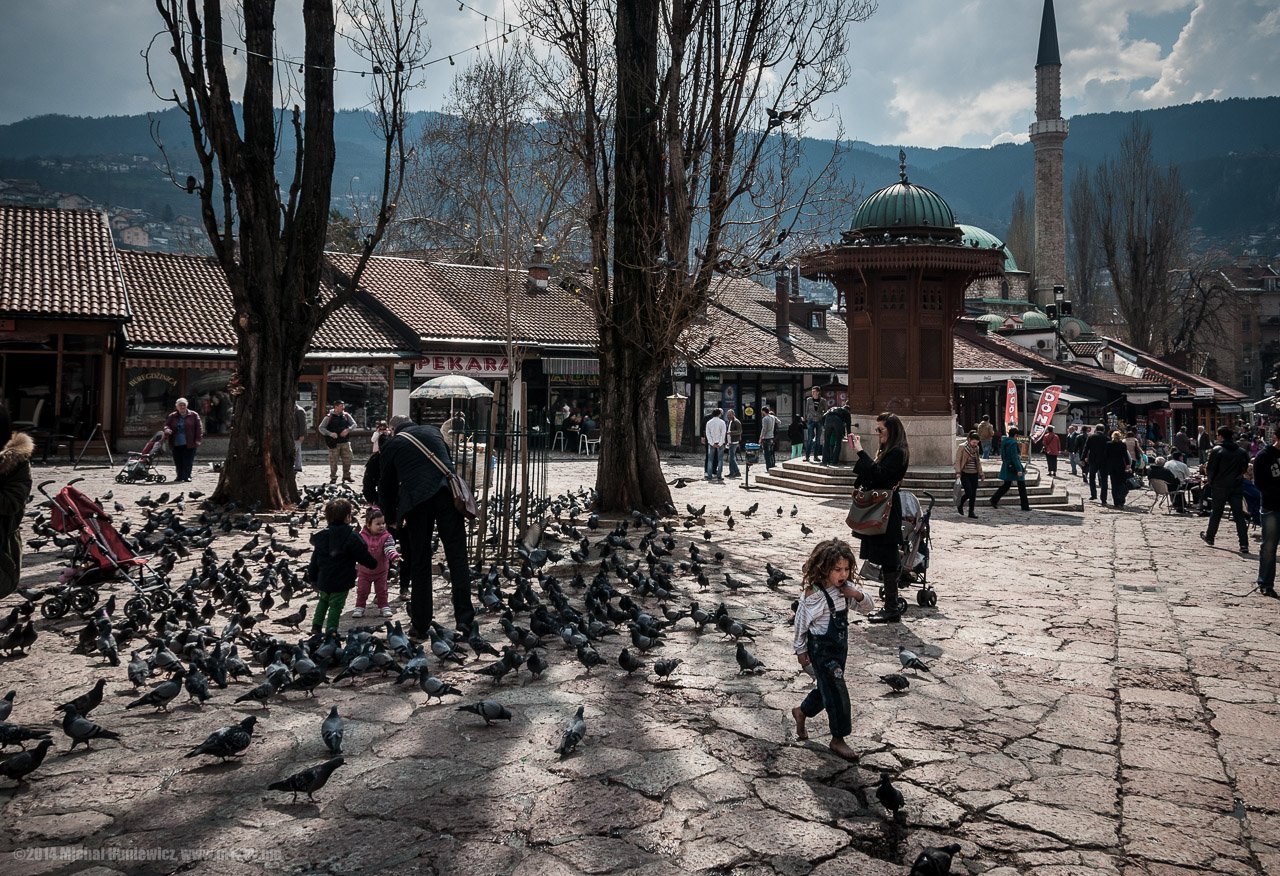
The Sebilj stands in the centre of Baščaršija square, at the entrance to the old bazaar. Locals often nickname the square Pigeon Square.
- By tram: the Baščaršija tram stop sits on the northern edge of the square, around 50 metres from the Sebilj, served by line 3 from Ilidža and line 1 from the railway station.
- On foot: Gazi Husrev-beg Mosque is about 200 metres from the Sebilj.
- By car: the bazaar is pedestrianised. Leave your car in a city car park and continue on foot or by tram.
Sebilj fountainTrg Baščaršija, Stari Grad, Sarajevo
What to see around the Sebilj
The fountain up close
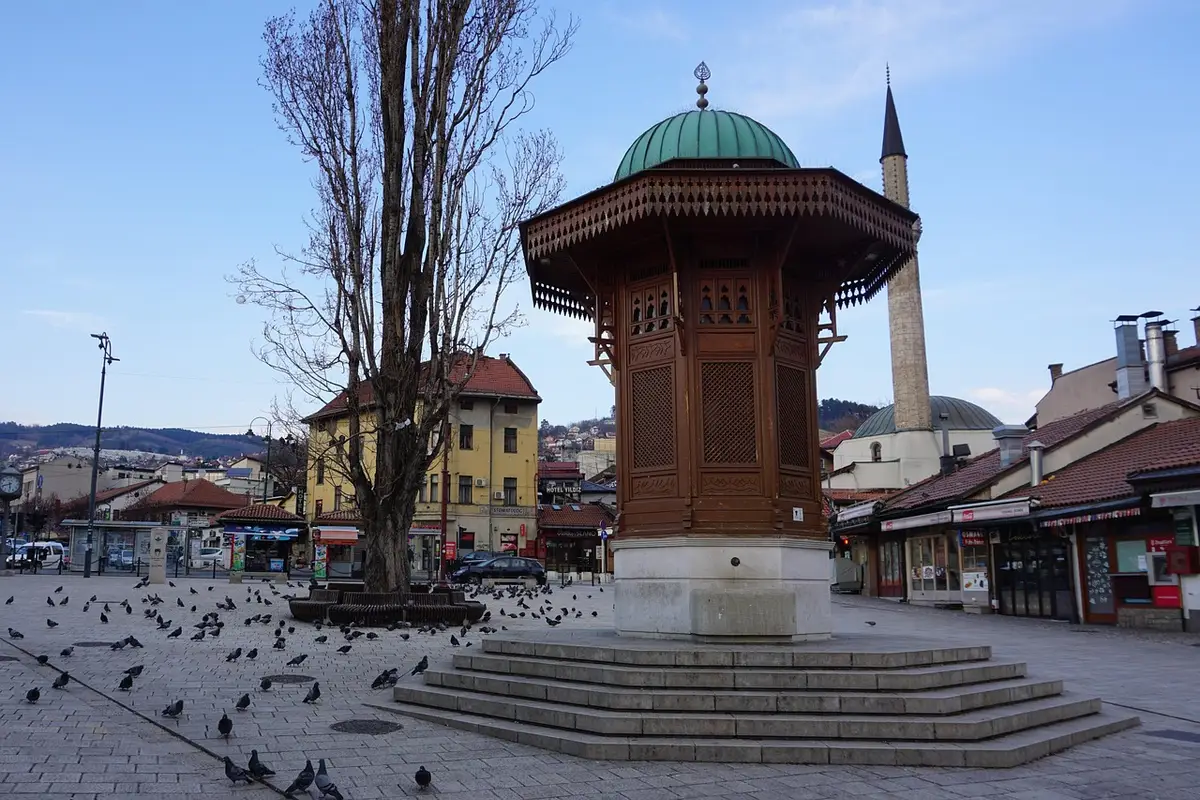
The Sebilj is a timber kiosk resting on a stone base, with carved wooden latticework and a green copper dome. It was designed in the Pseudo-Moorish style frequently favoured by the Austro-Hungarian administration for public buildings in Sarajevo.
Pigeons and Pigeon Square
Flocks of pigeons gather constantly around the fountain, giving the square its nickname. Children enjoy feeding them, making it a pleasant stop for a family break.
Kazandžiluk and the old bazaar
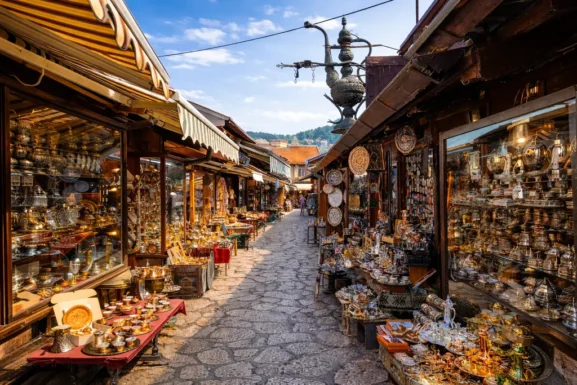
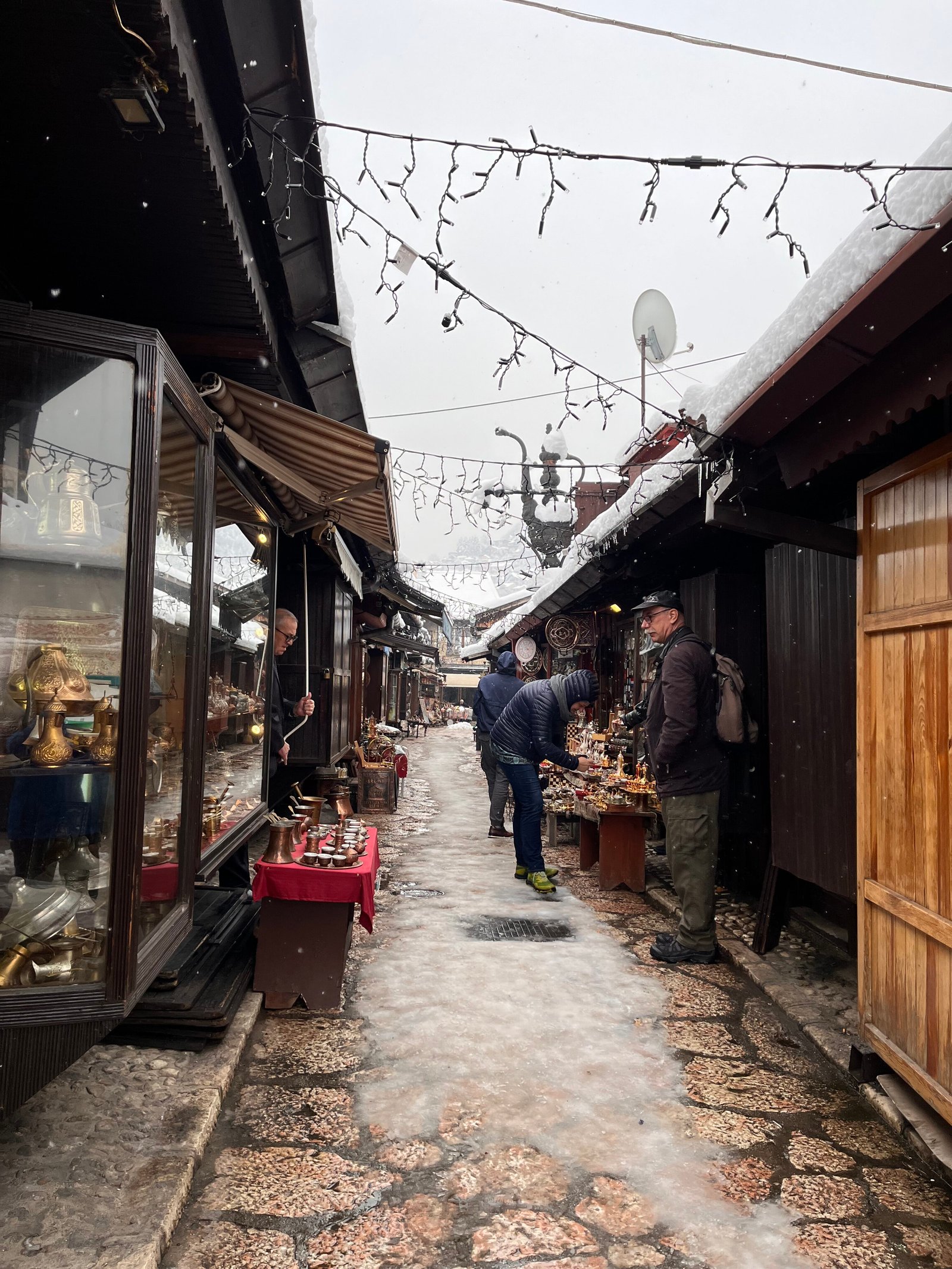
Just off the square begins Kazandžiluk, Coppersmiths' Street, where workshops still craft and sell copper coffee pots (džezve), ewers and trays. From here narrow alleys branch across the bazaar. Read more in our guide to Baščaršija in Sarajevo.
Gazi Husrev-beg Mosque and Bezistan
Gazi Husrev-beg Mosque is around 200 metres from the Sebilj. About 100 metres further stands Gazi Husrev-beg Bezistan, a 16th-century covered market and National Monument of Bosnia and Herzegovina.
When to visit
| Time / Season | What to expect |
|---|---|
| Early morning | Fewest people on the square, making it the easiest time to photograph the fountain. |
| Summer | Peak visitor season. In July the bazaar hosts the Baščaršija Nights cultural festival. |
| Ramadan | After iftar the bazaar stays lively late into the night. Check iftar times in the prayer times for Sarajevo. |
| Winter | The Sebilj under a blanket of snow is one of Sarajevo's most iconic sights. |
Halal near the Sebilj
Where to pray
Baščaršija Mosque (Havadža Durak Mosque) stands right on the square, roughly 60 metres from the Sebilj, and already appears in a 1528 register. Gazi Husrev-beg Mosque is about 200 metres away.
Prayer times are available in the prayer times for Sarajevo.
Closest halal food to the Sebilj
 Dućan Sardoba 2 – Latinska Ćuprija SarajevoZdrava hrana · Ul. Zelenih Beretki 30, Sarajevoabout 300 m from Sebilj fountain
- Pizza Calabria – Hamdije K. 47 SarajevoPizzerije · Hamdija Kresevljakovica 47, Sarajevoabout 750 m from Sebilj fountain
- Ćevabdžinica & Buregdžinica “ZMBT Mirza Aljović”Buregdžinice, Ćevabdžinice · Stjepana Tomića, Sarajevoabout 1.5 km from Sebilj fountain



Distances are straight-line. Listings are from the Halal Balkan directory.
History of the Sebilj in brief
- 1753.Bosnian Vizier Mehmed Pasha Kukavica builds the first sebilj, slightly lower down from today's spot.
- 1852.The original sebilj is destroyed by fire.
- 1891.A new sebilj is built to Alexander Wittek's design a few metres from the original site; some sources date its relocation/erection to 1913.
- 20th centuryThe Sebilj is restored ahead of the 1984 Winter Olympics and again after the war.
Replicas of Sarajevo's Sebilj now stand in Belgrade (a gift from Sarajevo in 1989), Novi Pazar (2010), St. Louis in the USA (2014) and Rožaje (2018).
Frequently asked questions about the Sebilj
What is the fountain in Baščaršija called?
It is called Sebilj — a wooden public drinking fountain in the middle of Baščaršija square in Sarajevo.
What does the word sebilj mean?
The word is of Arabic origin and means 'path'. It denotes a charitable public fountain where water was distributed free of charge.
Where is the Sebilj in Sarajevo?
On Baščaršija square in the Stari Grad municipality, right next to the Baščaršija tram stop.
Who built the Sebilj and when?
Bosnian Vizier Mehmed Pasha Kukavica built the first sebilj in 1753, which burned down in 1852. Today's fountain follows Alexander Wittek's design and is most commonly dated to 1891.
How much does it cost to visit the Sebilj?
Nothing. The Sebilj stands on an open public square and can be visited at any time of day.
Why is the Sebilj a symbol of Sarajevo?
It is the last survivor of the hundreds of sebiljs Sarajevo once had, standing on the main square of the old bazaar where locals and visitors agree to meet.
Are there replicas of the Sebilj?
Yes. Replicas stand in Belgrade, Novi Pazar, St. Louis and Rožaje.